Openness
One end sees the better way before anyone else. The other protects what already works. Teams need both.
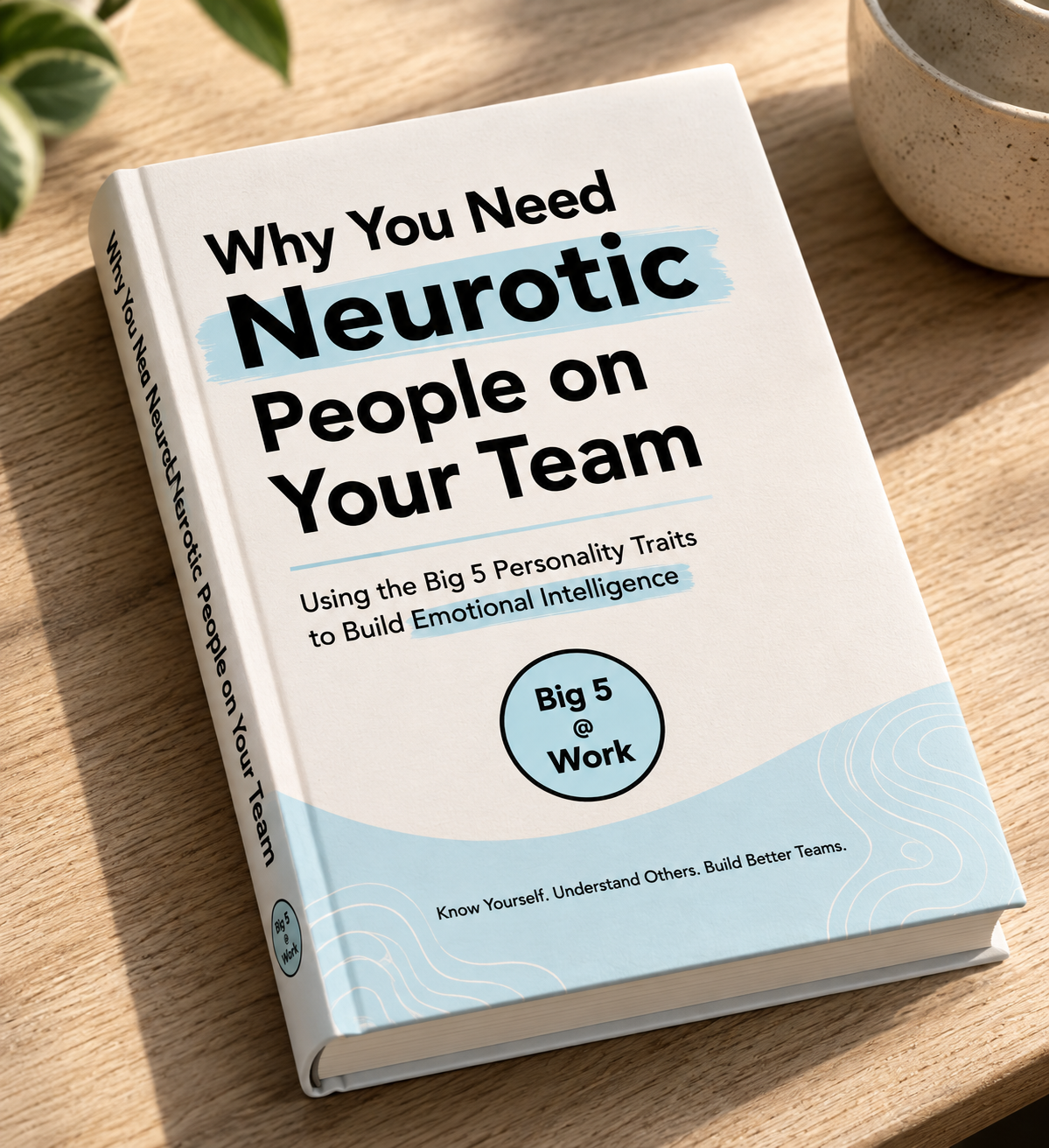
Every Big Five trait comes with a superpower and a pitfall. This book shows how yours show up at work, and how to work well with people whose preferences differ from yours.
“Your personality is your default, not your destiny. It’s where you start, and where you drift back to under pressure.”From Chapter 1, “Not Everyone Works Like You”
Why this book
Adapting to the room can get you through a door, but performing a version of yourself that doesn’t fit your traits costs energy every day. The book calls that cost Stretch Fatigue, and the answer isn’t more grit. It’s a clear picture of your default and the words to explain it to your team.
What you’ll learn
Each trait is a spectrum, not a type. Every chapter covers the superpower at each end, the pitfall that comes with it, and how people at opposite ends can work together.
One end sees the better way before anyone else. The other protects what already works. Teams need both.
Quality against velocity, and why neither one is the lazy or the difficult choice.
The connector and the quiet thinker, and why two equally outgoing people may be running on different fuel.
What harmony protects, what it hides, and the value of productive friction.
The trait that needs a rebrand. Every team needs someone who sees the risk early. The question is what you do with the warning.
The coaching method in the book
Most hard conversations go wrong in the first sentence. Two Things Are True starts with two facts, not opinions, then works out the answer together.
Start with something true and specific about what the other person sees, values or has put in. Their traits shape what they notice, so their concern usually points at something real.
Then name a fact about the situation that can’t be wished away: a date, a budget, a commitment already made. Not your preference. A constraint you both have to work within.
With both facts on the table, ask a question that only works if you answer it together. Nobody has to win, because nobody was arguing.
Previewed in Chapter 6 and taught in full, with scripts, in Chapter 12. The comprehensive assessment includes a script built on it for a real conflict you describe, and Big 5 at Work Consultants use it in workshops.
Better together
The language for every trait, and the Two Things Are True method for talking across differences.
Kindle eBookGet the book →Your five trait scores for free, or 29 facet scores and a personal report for $4.99. Share them on the Team Dashboard.
Free test · $4.99 full assessmentTake the free test →Your team practices the book’s conversations with the people they actually work with.
Virtual or in personSee workshop options →Built on research
Built on the Five Factor Model. Every trait chapter separates what the research supports from popular stories that haven’t held up, and a note on sources lists every study cited.

About the author
Christin is the founder and CEO of Big 5 at Work. She spent her career in marketing, most recently in clean energy, where she learned firsthand how much of a team’s success depends on the people in the room understanding each other.
It’s a Kindle eBook. You can read it on a Kindle or in the free Kindle app on a phone, tablet or computer, and it’s included with Kindle Unlimited.
No. The book stands on its own. Taking the free test before or after you read makes it personal, because you’ll see exactly where you sit on each trait the book describes.
Neither. In the Five Factor Model, Neuroticism describes how sensitive someone is to stress and risk. It is not a clinical diagnosis. The book argues the trait badly needs a rebrand, because the people highest in it are often the first to see a problem coming.
Your results use the standard trait names: Openness, Conscientiousness, Extraversion, Agreeableness and Neuroticism. The book uses the same trait names, along with the same facet names and two-ended workplace labels you’ll see in the full assessment.
Yes. If you’re booking a workshop, let us know you’d like to use the book as a pre-read and we’ll help plan around it.
.svg)